A Film by Andrea Hackl
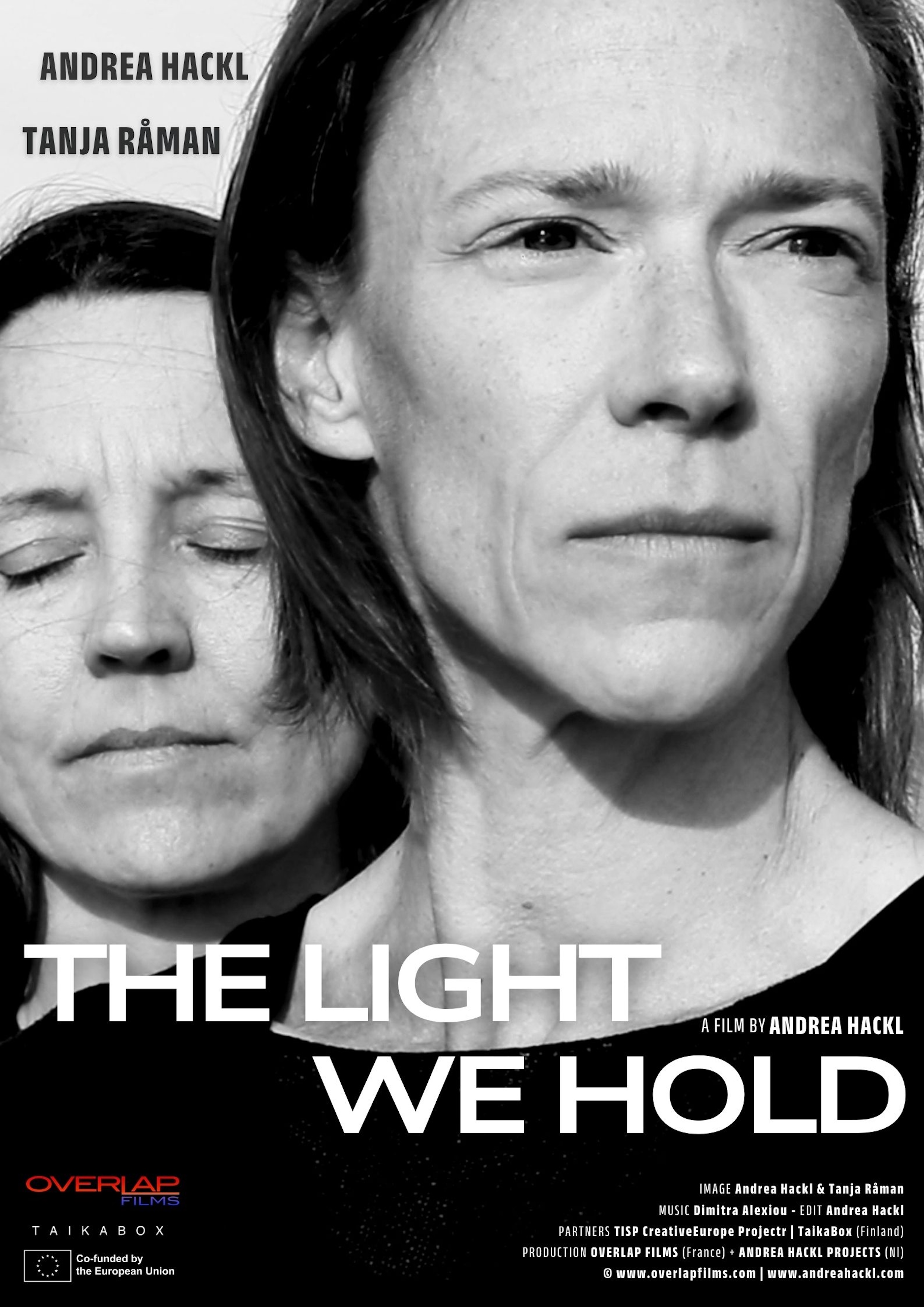
The Light We Hold
TRAVERSÉE DE LUMIÈRE
[2026]
duration: 8 min
SYNAPSE
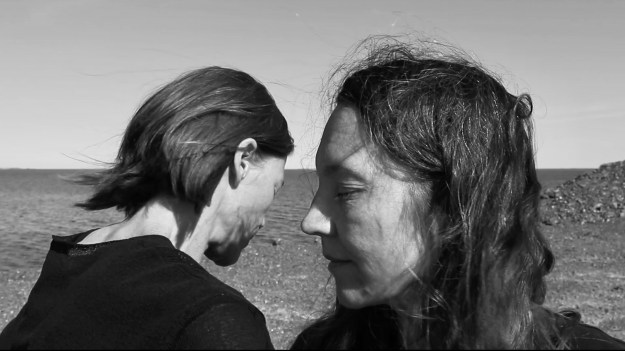
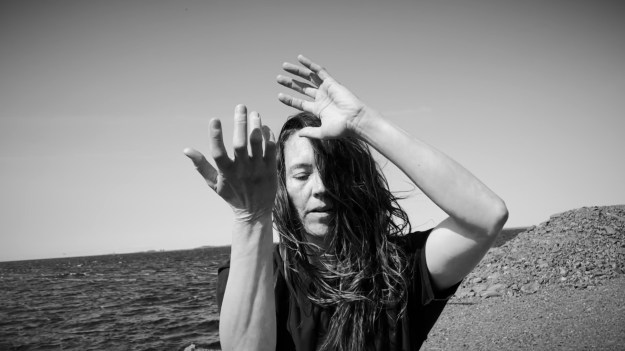
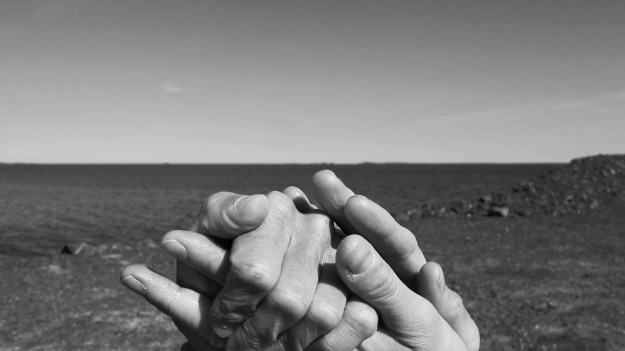
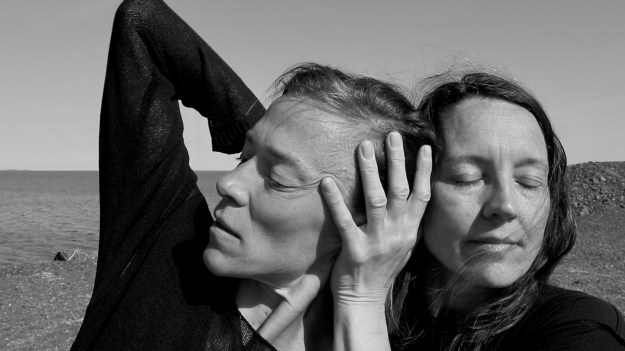
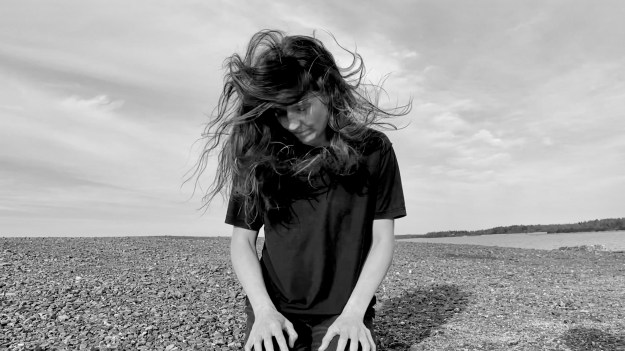
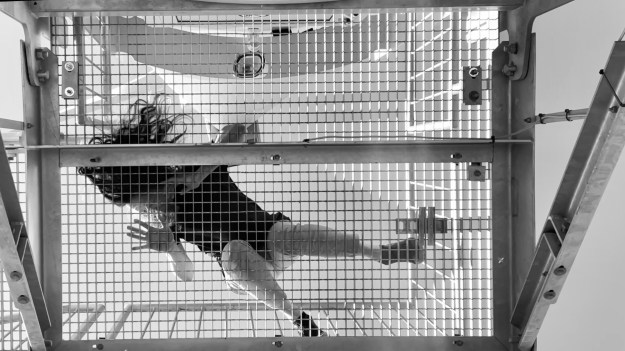
In a liminal world where time folds in on itself, two women meet. They may be sisters, lovers, friends, or reflections of one another. They are bound by this space – one woman’s dream, the other’s memory. One belongs to the realm of the living; the other lingers as a ghost. And what if sometimes it is the dead who grieve the living, unable to let go.
Director: Andrea Hackl
Cast: Andrea Hackl & Tanja Råman
Image: Andrea Hackl & Tanja Råman
Music: Dimitra Alexiou
Editing + Voice Over + Sound: Andrea Hackl
Location: Oulu, Finland
Partners: TISP CreativeEurope Project | TaikaBox (Finland)
co-production: OVERLAP FILMS [France]
DIRECTOR’S NOTE
In no previous project have war, destruction and the challenges that humanity faces been as present in my mind as in the overall making process of this film, from its first conception.
As an attempt to somehow answer as an artist to what I was witnessing, I used the opportunity of a travel across Europe and started to record conversations with people – at times colleagues, at times complete strangers – to ask them about connection and hope. These little interviews turned into very special, shared meetings. Beyond what was shared with me, it was very unique to see a shift taking place within everyone I spoke with.- it was indeed like a light being switched on.
This series of meetings and conversations, the honesty, grace and fragility as well as power shared with me through them, were the seeds of & led to this film.
Themes of empowerment are often, on some level, present in my work. At its core, this film is about human connection and the power within that connection, the essence that survives beyond time; as well as loss and grief, the transformation – and equally power – that lay within this process. Inspired by how dreams, memory and also grief move, the film explores time and a none-linear but cyclical evolution. – a story evolving in waves, traveling through loss & grief, towards letting go and eventually release & renewal.
The relationship of the two women that we see evolve, is like a symbol for that primal process.
It equally holds the realities & energies of different kinds of relationships: sisters, friends, lovers, mother/daughter.
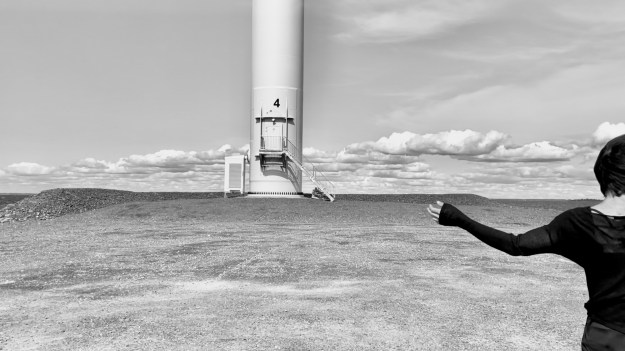
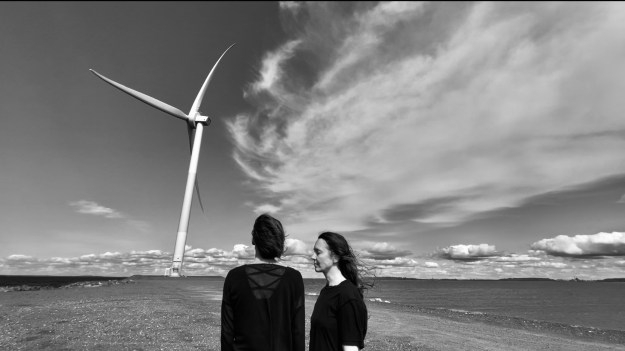
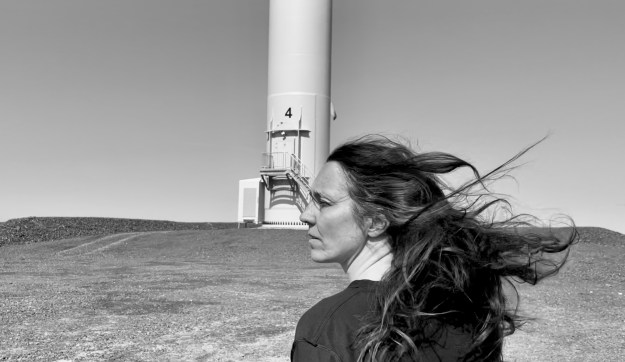
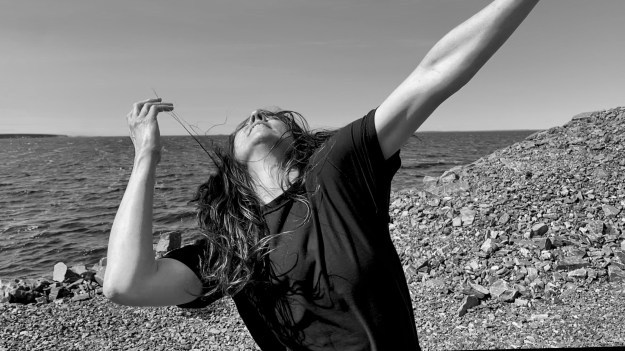
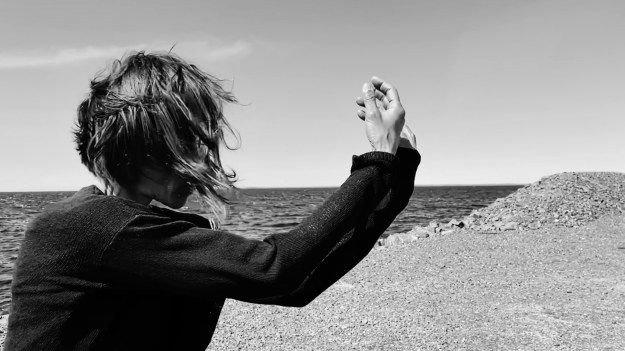
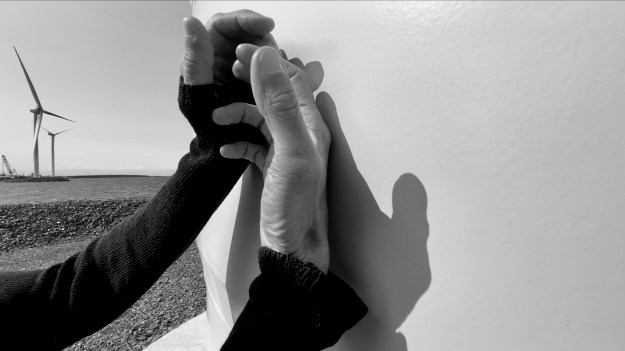
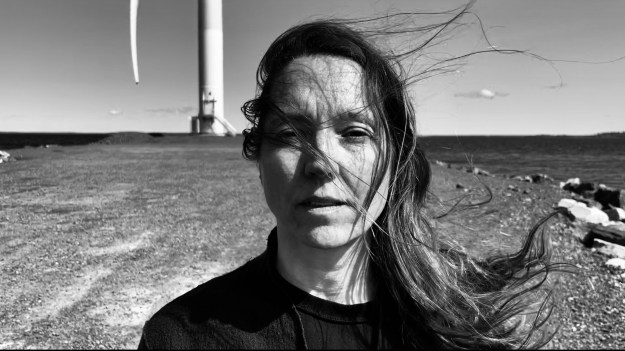
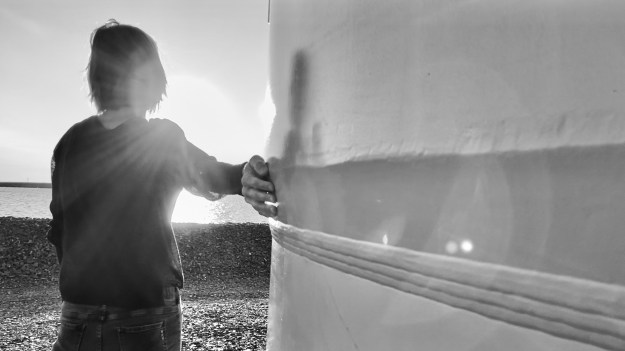
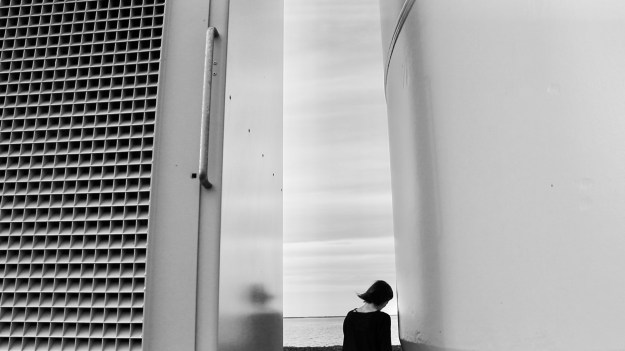
It was very intriguing for me to explore their relationship and meeting in this space, that feels somewhat isolated / surreal / out of this world, to place this human connection, a generally caring relationship of two women in this space, that maybe even has a desolate feel. – an empty space, two human beings, the huge, mechanical presence of the windmill. However, the presence and the movement of the wind, which is an actual, physical and at the same time symbolic entity, was connecting us and our relationship with (the movement of ) the windmill, the sound it produced and the space itself.
The story evolves in a world between worlds, between past and present, time folding in on itself. The space is like a breathing organism in itself – holding the two women, while it is an extension of them, their psyche / subconscious and – simultaneously / vice versa – they are an expression of the space. The windmill is like the node of that organism’s ‘neural system’, an anchoring point and link between the different dimensions / worlds; the visible & invisible. It was intriguing for me, to work with the themes of ‘loss’ and ‘death’, the mythical realm of the after life, which might make one think of a ‘dark’ place, while being in a location close to the arctic circle shortly before the summer solstice – a place and time without real ‘dark’.
Another element of connection is the element of wind. The Wind Element in Buddhism embodies movement, change, and the transient nature of existence. It symbolizes the connection between mind and body, and the processes of life and death. In Tibetan Buddhism, it symbolizes the stage of dying, freedom, and clarity – linked with Bardo. After Tibetan Buddhist teachings our soul travels through 6 phases (and states) of Bardo throughout its life cycle.
I am playing with this liminal space, between life and death. One of the two women is a ghost, inhabiting that world, while for the other, that space is like a realm of dream and memory. They are both connected through this place, remembering each other.In myths and legends around the world, speaking of the presence of ghosts, beyond the dead being able to communicate with us, there are different reasons given why ghosts may linger, e.g. some have not finished something whereas some have not yet realized that they are, in fact, dead. What if the dead are equally passing a phase of grieving the living they’ve left behind, at times not able to let go? – Andrea Hackl
 ANDREA HACKL PROJECTS